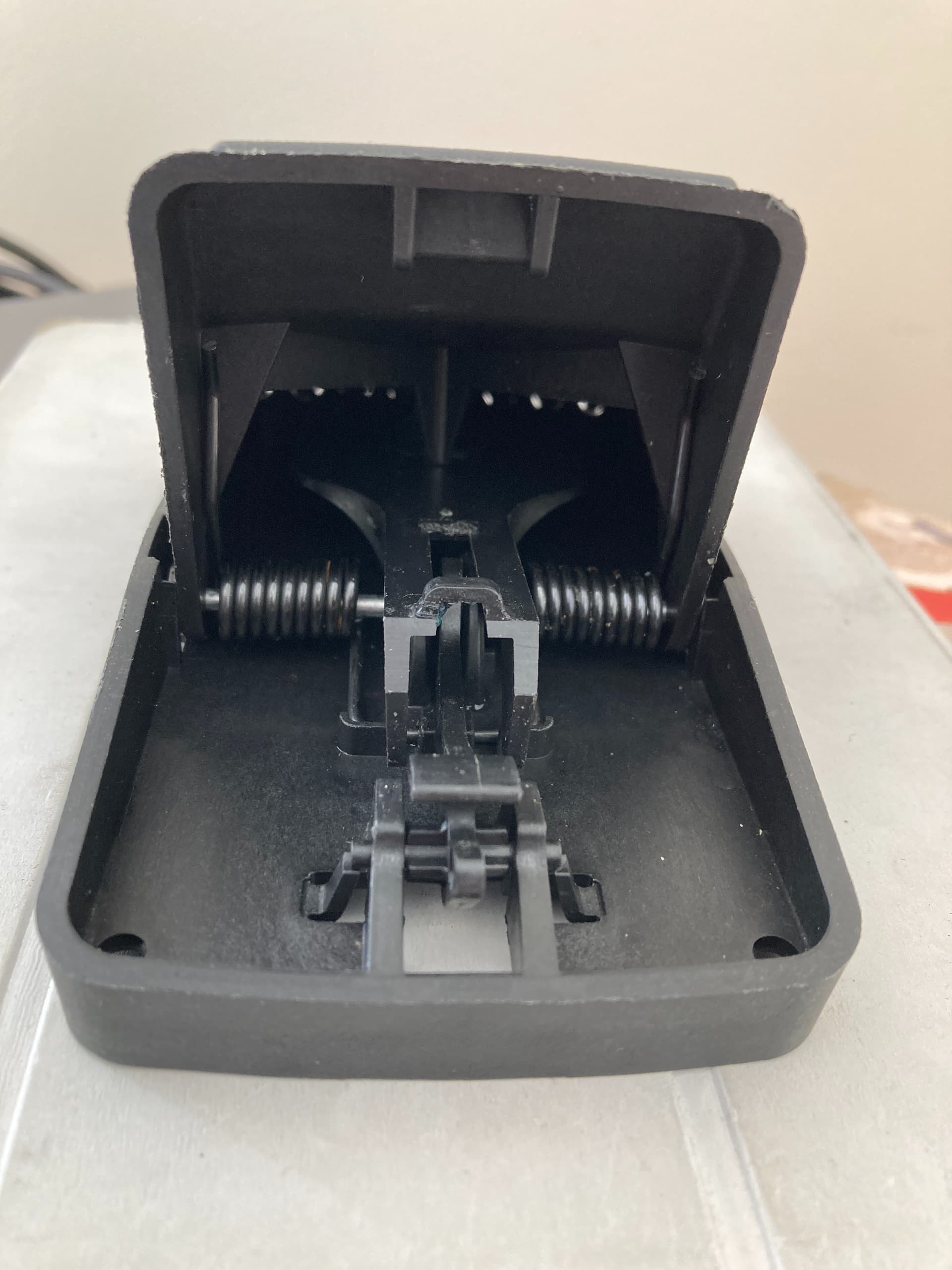
Trapping Tips - The T-Rex/Tomcat Rat Snap-Trap

I have taken your tip of spraying canola oil into the body of the tunnel-box to hopefully eliminate the slug infestations. These slimy critters are the worst of the bait theives also, I think.
While about it, some of my PB baits were given a coating of canola oil also. It’ll be interesting to see how that goes.

I noted in your comments you have an aversion to the use of poisons as a pest control method.
Is this because of secondary poisoning to protected bird life and fauna?
I have heard, but cannot find any studies, on whether this is a significant factor and would welcome any suggestions of documented evidence of any detrimental by-catches.

Most of the poisons used in large scale pest control operations, to my knowledge, use plant-based poisons which are quickly neutralized when consumed by the targeted species or when in contact with ground or water.

Cheers

That sounds like an excellent trap-site. Do you get any stoats or weasels there?

I regularly kill brown rats the size of my forearm. I keep forgetting to bring a small scale with me to weigh them. They’re 450-500g without question. The browns are starting to head for the bush now, so I’ll have to wait a while to weight my kills.

It’s possible that the tunnels pushed farther back makes it look more like the grasses have been disturbed by a prey species. How far a distance are we talking? An extra 50cm? Could the rats feel safer that way?

Ants are a problem, of course, but Gisborne cockroaches and tree weta are my worst enemies, because they gobble up PB and Nutella like the damn mice do!
For whatever reason, I haven’t found a single slug or snail on a lure, and it’s really rare for me to find one inside a tunnel.
I’m also going to try the oil spray, because I want to find out what the roaches and weta think about greasy food.

The primary reason why I don’t use poisons is the risk to wildlife of secondary and tertiary poisoning, even if it’s low. There are 2 dogs to worry about, too.
I don’t have any objections to using poisons as a control tool, by any means (I’m a big supporter of 1080), but I prefer to trap. If there was a bad mast year and I didn’t think my kill-rates were high enough, I’d dust off my bait stations.

Cheers.

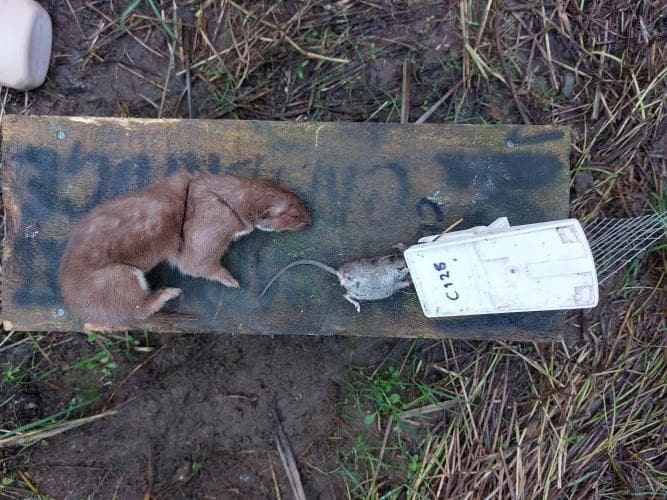
The trap line in question snared 4 weasels in the last 12 months. Unfortunately only 1 was a clean neck/head strike. The other 3 required a quick dispatch using a customized piece of timber always carried.
In all but the clean kill catch, the colocated mouse traps have had a caught mouse in the same tunnel-box. The weasels have met their demise crossing the TR to get to the mice.

5 small hedgehogs were the remainder of the miscellaneous catches, all, mercifully cleanly struck.

The tunnel-boxes where it is possible to use thickets or carex grasses to push them back into is, as you say, about 500mm back with just the back end of the box visible.

Yep, the weasels love their mouse tucker, for sure.

I’ve made a TR double-set that has worked well for me, so far, trapping some rats and several female weasels over the winter. I’ve placed a mouse trap double-set next to it, to give me a steady supply of mice to use as lures inside the tunnel.

If a predator scavenges out of the mouse trap DS before I next check it, the odds are really good that it’s going to come back to the tunnel for another meal. If the mouse traps are empty the next time they visit, and I’ve put a mouse inside the TR tunnel, the odds of a predator entering the tunnel are pretty high.

The odds are even higher, because I encourage mouse activity inside the TR DS, by luring the cups. Most of the time, they escape unscathed, which is usually a problem. I’ll trap one now and then, which I put straight into the small space between the DRs. In winter, mice usually stay good for 3 days, so it’s a convenient lure that is one of the few that doesn’t go moldy on you.

I can’t wait to find out how well this DS performs when mustelid activity increases. It has the potential to result in more rat kills than normal during spring and summer, as the chance to scavenge a mouse should contend with other food sources. Rats that have been eating drupes for days one end, may be looking for an alternative food source. If a rat travelling from one to tree to another encounters the tunnel, hopefully they’ll stop to investigate it.

I’ll take some photo of the tunnels to show you how I’ve got things set up.

That was a lucky guess about the depth of the tunnel that the browns like! There are a lot of pheasants here, which often have nests in long grass. They’re definitely brown rat targets, so I’ll scout for an area that might work for a tunnel. We have some hens, so I’ll fire in some feathers and an egg.

Cheers.

1 Like

Thank you. I would be interested in seeing a photo of your tunnel-box setup.
Coincidentally I caught my 6th weasel this morning, 3rd in a row in the same TR, same tunnel-box, clean kill. The co-located mouse trap had a mouse in it.
Also, a further 9 mice were caught from the remaining 13 mouse traps in tunnel-boxes.
The weasel catching tunnel-box is positioned near a burrow which is regularly excavated. It looks like a small rat burrow but could be mice??. Weasels don’t live in burrows do they?
Cheers
image

Nice work on the weasels. The scent of mice and other weasels is a real winner. When I kill weasels and stoats, I try to express some musk onto or into the tunnel as a lure. If I can’t, I rub the fur on the timber.

Can you take a photo of the suspected burrow? I’ve only ever found brown rat burrows and they’re 50mm diameter.

Here are some photos of the TR double-set that has killed a few weasels this year.


This tunnel has performed well, but I’m going to give it a few tweaks, and make an improved model this summer.

I painted it green to make it blend in with the environment. Normally, having a dark trap could be problematic, but it’s in a site with enough shelter that it isn’t a problem. The entrances are 50mm in diameter. The platform is 40mm high.

In the lure cup between the traps is a licorice All-sort, which I’m giving a go. Mice like them and don’t eat much per visit, so they last way longer than paste lures do. Behind it is an avocado pit. It’s a lure that small rodents can’t interfere with and I don’t think that a rat could safely position itself to eat it. Before I put it inside, I gave it a good clean, to prevent mold.
On top of the avo pit and on the TR wall are some blobs of Goodnature Meat Lovers’ lure.

The TRs have their cups removed, to direct predators to the lures between the traps. They’re both traps that have seen a lot of action, so I may need to replace them. With lured cups, the TRs would definitely get some kills. Lured cups, plus the lure between the TRs could encourage predators that have cleaned out a cup to put itself in a more dangerous position. I don’t know what technique would be the most effective.

I prefer to trap predators head-on with TRs, so I could replace them in this tunnel with a flat snap trap. My weapon of choice are made2catch’s metallic traps. They knock the stuffing out of Victor’s, IMO.

Small rodents have been active inside the tunnel recently, but their numbers are really low right now. In hindsight, I could have put a mouse trap between the 2 TRs, but I would have to make sure that it was really secure.

Can I see how you tunnels is set up?

Cheers.

A collection of bait research here.

Your tunnel-box setups are well constucted and with obvious research and experience behind it.
Good luck with your revised proposals for setups.
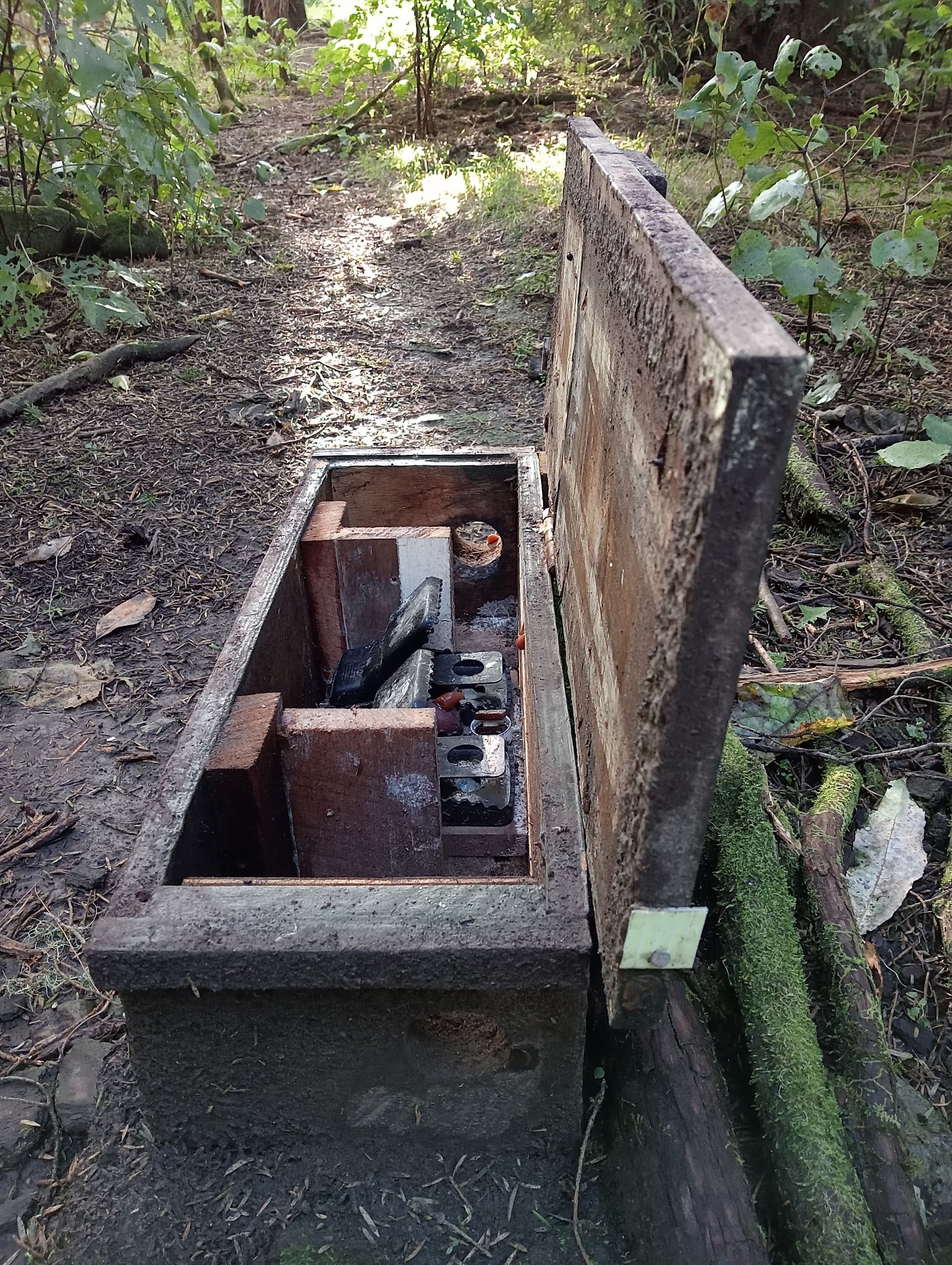
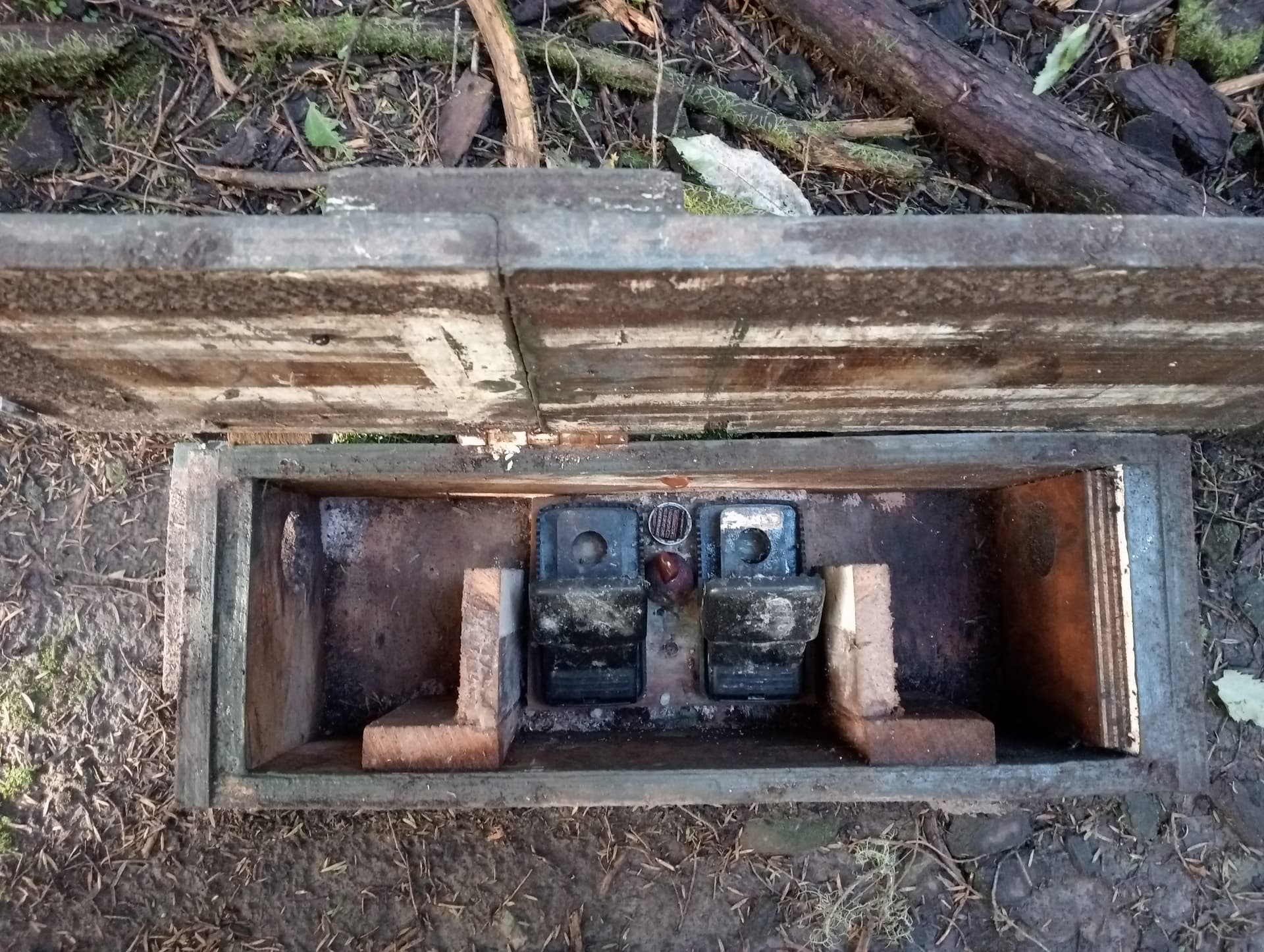
Ours are very basic with most of the boxes a square nailed up tunnel with netting both ends. Mass produced and supplied by councls and local pest control NZ organizations. They are quite narrow with only abot 30mm of width left beside a T-Rex trap. (See pic)
My side kick has constructed a few boxes slightly wider, with a hinged roof overhanging the entrance hole.
Strangely, we have not caught a rat in this model yet, but consistently catch mice. (See pic)
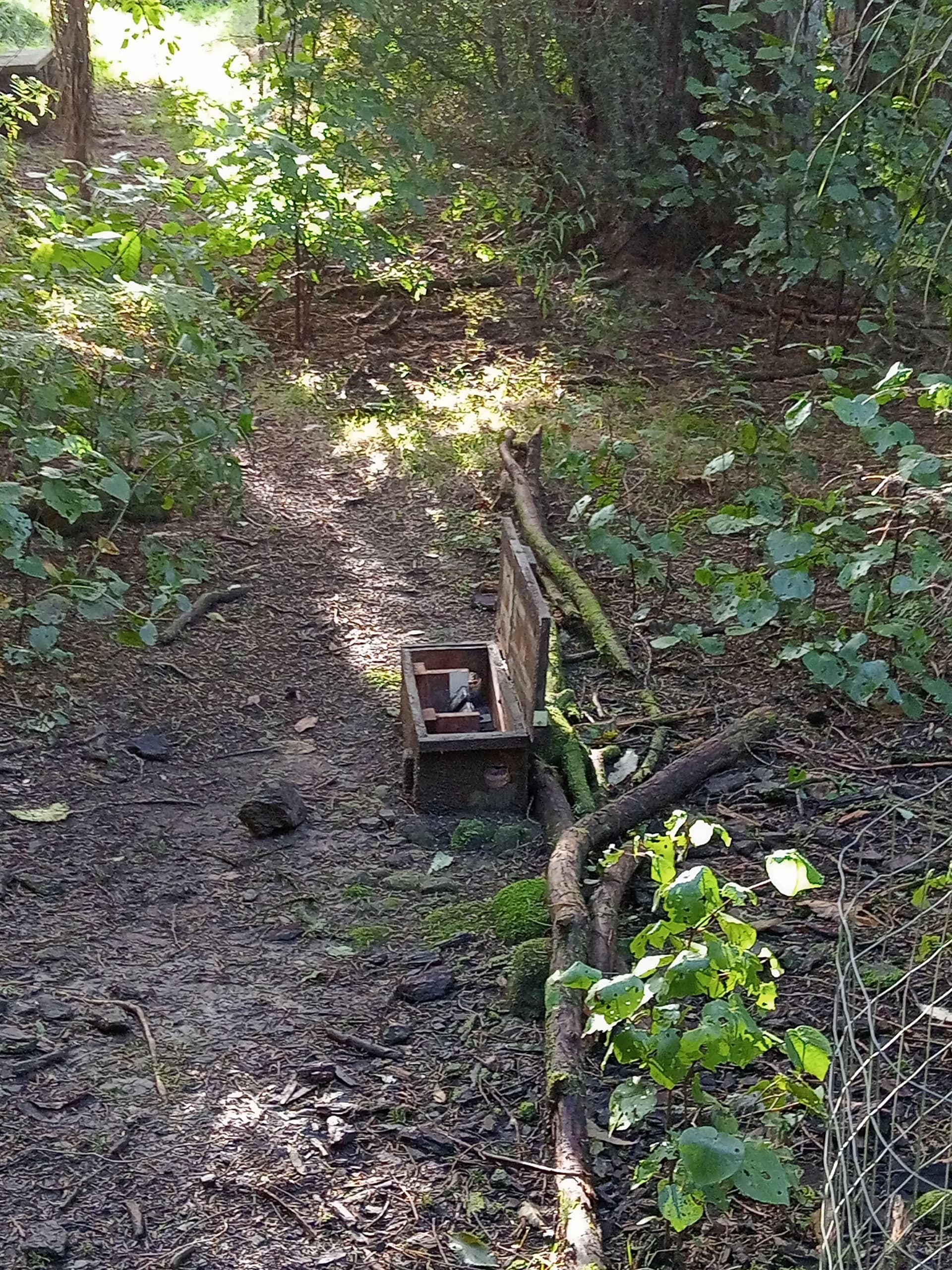
The burrow with unknown occupants where we snared three weasels nearby has a mousetrap in the pic to help guage the size.
Cheers

The ones sold by councils and PFNZ clearly do the job very well.

I’ve considered investing in some myself, but I need to bite the bullet and do some more carpentry, so that I can start making my own. My tunnels would be customized to whatever trap model is being used and I’d make double-sets, instead of single-sets.

I’d stick with heavy timber bases, but I think that the sides and lid would be fine if they were plywood, making them far lighter to transport.

The pics didn’t show up!

[https://photos.app.goo.gl/sDQ3FDwYZTmzmh8D8

Tunnel boxes, burrow.
Cheers

I’m a big fan of tunnels with hinged lids. DoC double-sets have terrible swing-lids. I’ve given several of them hinged lids and it makes things so much easier.

I’m surprised that you haven’t trapped any rats in that tunnel. Small rodent activity should interest them.

Time and funds permitting, you could add more traps to the tunnel pictured. It’s clearly an above-average site, so the investment could prove worthwhile.
A second rat trap could go behind the white trap, with the trap entrance facing the side of the tunnel that the mouse trap is on (an L shape, basically). Between the 2 rat traps, you could leave a gap big enough to add another mouse trap. You would have to mount the traps in place, of course, because 1 active rodent could start a chain reaction.

That must be the burrow of a mouse or small rat. A UV torch would reveal the scent-trails, if that’s the case.

Cheers.

Good advise, and certainly worth doing.

1 Like

Wow! Great posting, and the replies are also informative. I’m a big fan of the T-Rex trap. My first experience was with a single trap that was located inside the water cylinder closet in a rental house. thirteen ship-rats in 30 days - two within 90 minutes while watching the telly. It’s a very loud snap.

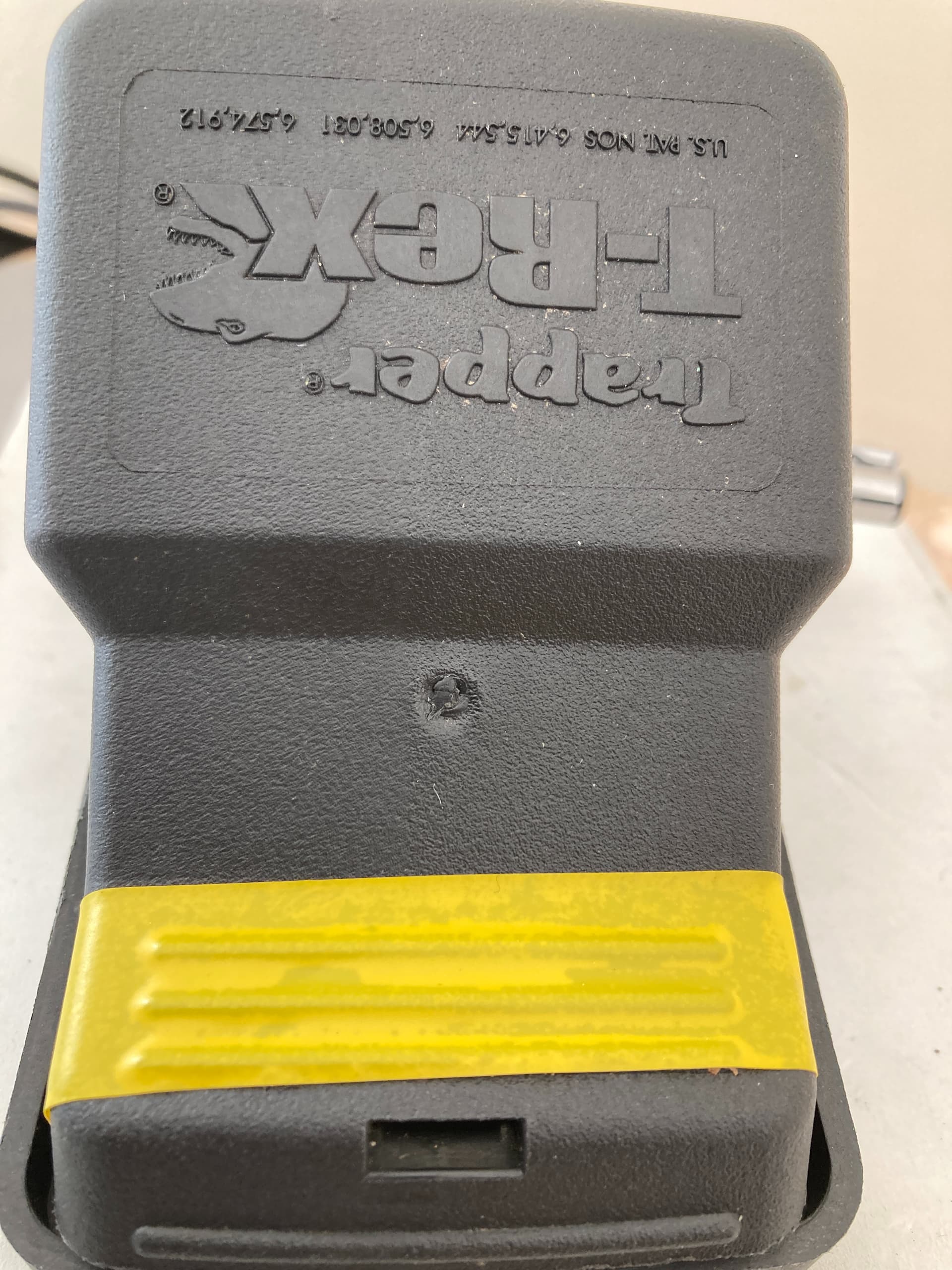
I now have 20 TR traps in tunnels set on my street. It takes about an hour if I check every trap and rebait the TR where mice have cleaned the peanut butter without tripping it. I put a piece of yellow electrical tape on the handle so I can determine if the trap was tripped from 5 meters away. Since I like to do a daily check (the neighbors have allowed me to enter their property) I can do a quick 10 minute walk and only service the ones that were tripped, then do the full hour every two or three days.


1 Like

Sorry for not replying sooner, but the weather here has been great, so I’m trying to take advantage of it.

Those are crazy numbers with 1 snap trap!
Were you trapping mice/small rats with the trap, too?

Thanks for the compliment. I didn’t think there was much point in reviewing a trap if I didn’t go into detail and share my experiences with others. At some point, I’m going to revise the post, adding photos and more tips.

When you run out of the tape you’re using, I’d replace it with white duct tape, because it will be easier to see the traps from a distance and duct tape last for ages, because it’s strong, waterproof, and UV-resistant.

General trapping tips (feel free to skip these, because I don’t know how much experience you have and how much experimenting you’ve done).

Do you keep records? If not, it’s worthwhile, because it’s the best way to increase your trapping-rates. As a rule, a small number of traps will make up the majority of your kills, because they’re in the sites with the most rat traffic. If Tunnel A is averaging 15 rats per year, and Tunnel B at the neighboring property is averaging 3, add B to A. Over the course of a year, your kills will increase significantly. For one thing, you’ll start to get 2 kills per night, instead of 1. When 1 rat stops to investigate Tunnel A and is killed, the next rat is likely to investigate Tunnel B. With daily checks, you could/should make a way bigger dent in local rat populations.

If you can narrow down the sites with the most traffic, and combine tunnels at those sites, you will be able to check the tunnels much faster, making 8 stops, instead of 20, for example.

I wouldn’t use PB all the time, because rats like variety in their diet. PB’s a good lure, overall, and it’s a good, sticky base lure, but even squishing a sultana or a dried cranberry on top of PB could result in an uptick in kills. If a rat has had its nightly fill of protein and fat, a piece of sugar-rich dried fruit should be a more attractive lure than PB.

Rats love Nutella, so buy a small jar of off-brand Nutella and use it for a few weeks, instead. You could conduct a mini-experiment by using PB in every second tunnel and record the results for a month. Because you’re check 20 tunnels daily, you’d collect a lot of data in no time.

I haven’t tried this, yet, but avocado is reputed to be one of rats’ favourite foods, so I’d give that a go. One small avo would probably fill up all of your cups.

Because there will be pets at most of the properties where you have tunnels, presumably, putting animal fat in the TR cups would be risky in terms of interference, but you would probably experience a significant spike in kills.

Cheers.
Thanks for the additional information! I will try the fruit and maybe some Nutella if my wife ever leaves any in the jar :slight_smile: I’ll also move a couple of non-performing traps closer to the most successful locations.

Yes, I’m getting mice in some of the traps (three this morning). Most of the time, they aren’t heavy enough to trip the mechanism, and once I had two that were sharing their last meal.

Yes, I’m using TrapNZ to record my activity and I keep the neighbors that have allowed me to put traps on their sections informed. There’s a young man up the street that said he’d like to help over the school holidays.

It should be pretty obvious which tunnels aren’t performing well, since you’re using TrapNZ already.

Before you move any tunnels, re-scout the properties that aren’t getting good results. There could be a lot of rat activity on a property that’s being missed, because the tunnel isn’t in the right place. Look at a property through a rat’s eyes, in terms of safe travel routes and things that may be of interest to them.

Outdoor buildings are excellent potential sites, because they give rats protection from the elements, cats and dogs, and they can be a good source of nesting materials and/or good spots to build a nest. Rats will eat artificial and natural fertilizers, and bags of seeds. As a rule, cluttered sheds/garages are better sites than tidy ones, because rats feel safer in them.

Good luck with the apprentice. You could always put him in charge of a few experiments, trying different lures and lure combos, re-siting tunnels, etc.

If they fit, you could put a mouse trap in the rear of some tunnels, behind the TRs. This will reduce interference levels, to some degree, and mice are excellent lures. I recommend the red and white traps sold at Mitre 10. You can mount them by drilling a small screw through the cup. If you put a mouse inside a TR, there’s a good chance that you’ll kill scavengers that aren’t interested in PB, Nutella, etc. If there are any weasels or stoats in the area, this would probably be the best way to trap them using snap trap tunnels.

Cheers.

Great read thanks. Am curious whether the meat would be better dried? I collect fat and scraps from sheep kills on the farm to use in traps so wonder about doing this to make it more long lasting? How big do you cut the meat pieces?

Thank you Andy for the comprehensive bait research paper.
Brodificoum was featured as a threat to morepork.
Nothing on the effects of pindone, a widely used pest control bait.
Very indepth and thorough research all the same.

Thanks for the compliments!

With TRs and other snap traps, I only use cooked meats and fats. The heat and the blowflies make using raw lures pointless here in spring and summer, and stoats and weasels dislike traps that smell like rotten meat (and they’re not alone!).

When I put cooked meat in TR cups, I cut it into square pieces that are about 10% bigger than the diameter of the lure cup. Because they’re larger than the cup, you have to squeeze the pieces in firmly. A big problem with using raw meat in lure cups, is that it shrinks as it dries, making it easy for predators to remove with their teeth or paws.

Before I put the meat in the cups, I put in some smooth peanut butter as an adhesive. The PB also acts as an “insurance lure”. If a predator is able to steal a piece of meat out of a TR, some PB will be left in the lure cup. Unless the thief returns right away to lick up the PB, the TR could still make a kill that night.

To make the meat pieces even more attractive to predators, I recommend giving them a coating of fat. Bacon or sausage fat will do. Putting some fat/grease onto the treadle past the lure cup makes the trap smell stronger and is another insurance lure.

Saturated white fat is the best lure that I’ve used, in any of my traps and tunnels. You could make your own supply of white fat, because you have access to all of those fat scraps, but you should look in your local supermarket/butchers’ store to see if they stock tallow, because it would save you a lot of time.

Do you use any DoC tunnels?

Cheers.