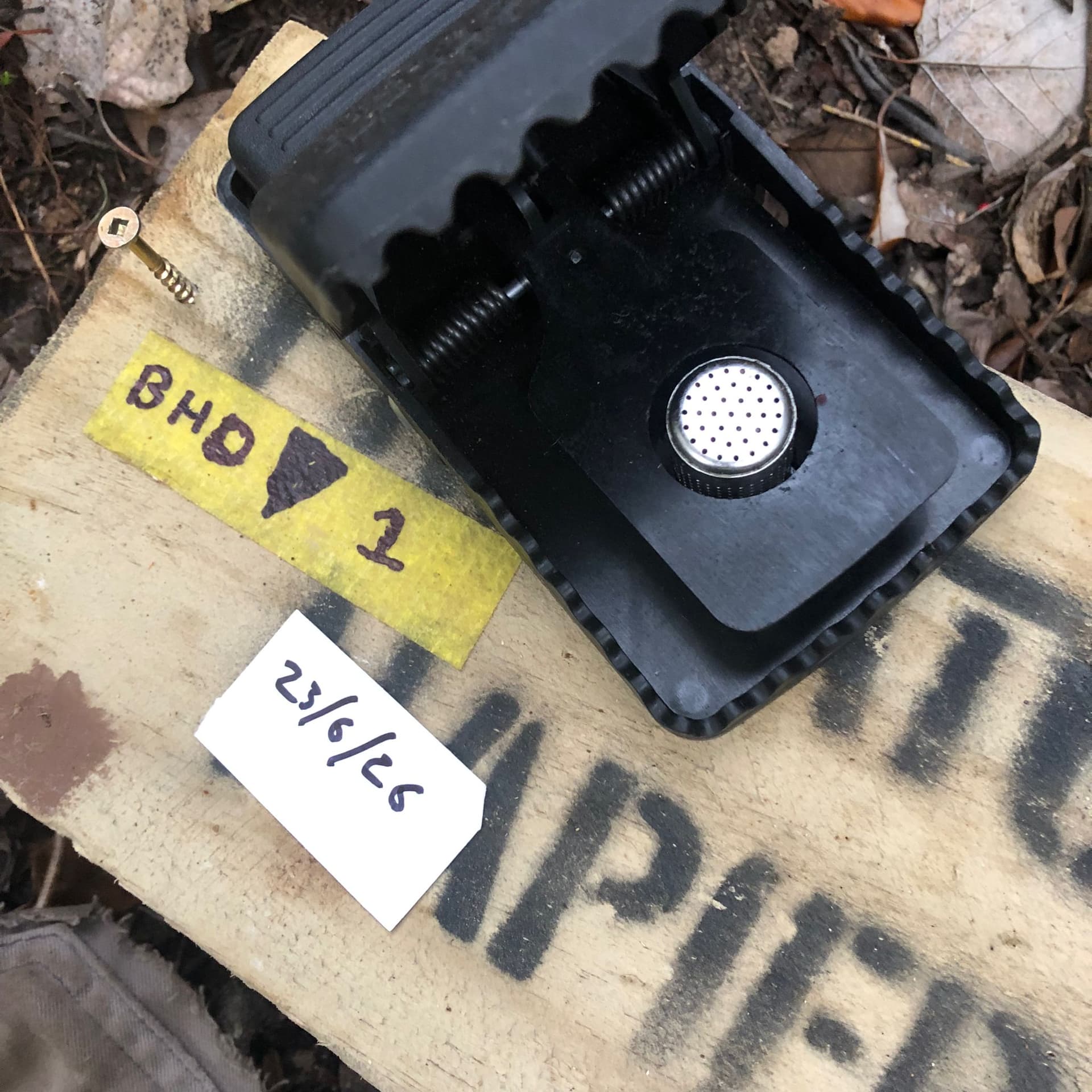
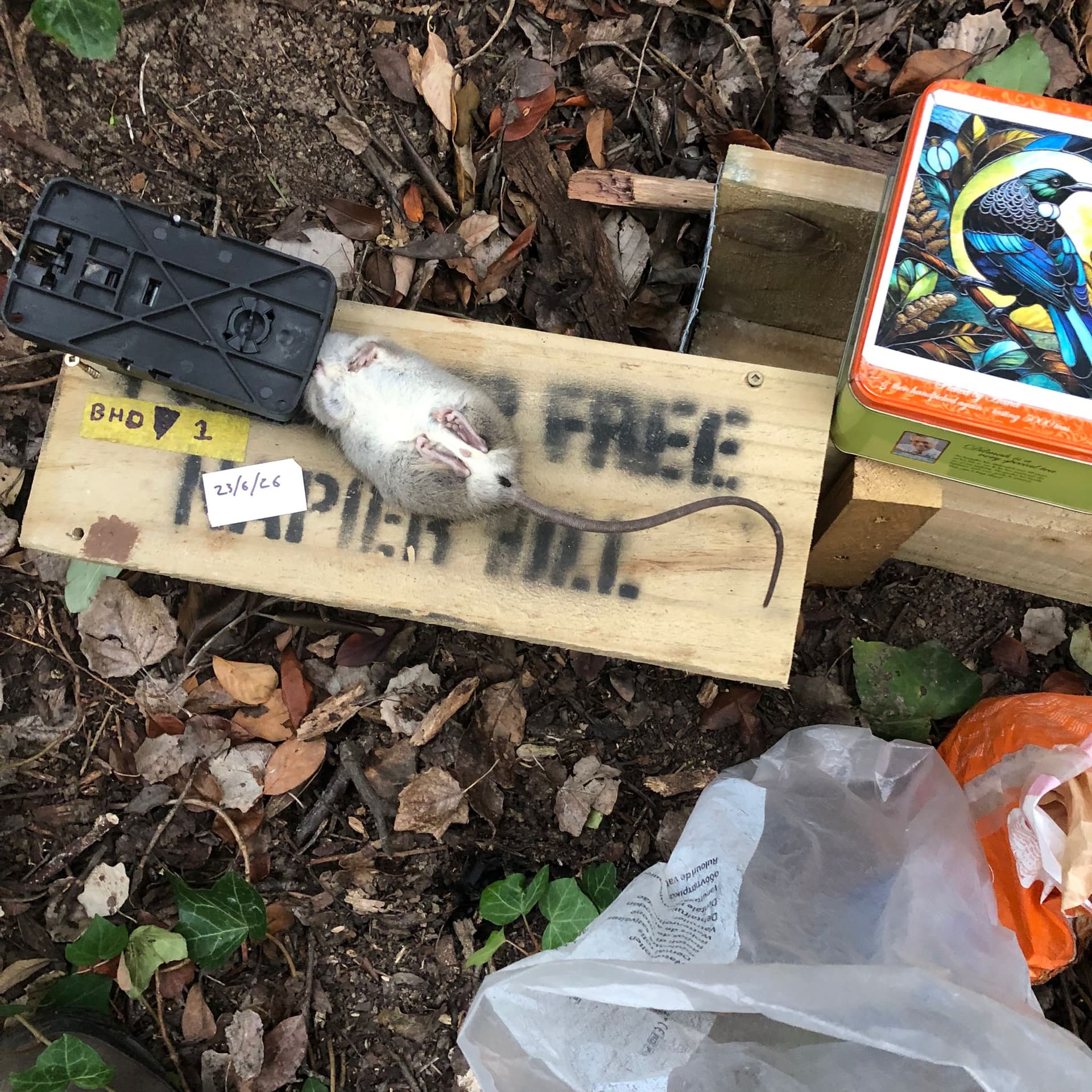
We have a big problem with bait disappearing. One of our enterprising volunteers was successful with this method of counteracting it : a tea strainer was cut shorter and fitted in the bait cup. Shown from above and below in these two photos. If only we had bait cups designed like this.
4 Likes
I have a problem with leopard slugs and ants taking the bait so this is an Excellent suggestion which I will try. Up till now I have resorted to putting a cap of “No MoreAnts” in the trap along with a sprinkling of slug bait. Both work, but this might solve the problem completely. I’ll let you know! B2
I’ve been trialing diatomaceous powder in trap boxes to kill insects. Too early and too wet to report on its effectiveness yet.
I also started trialing diatomaceous earth after reading about it on the internet but was reminded by our groups Health and Safety officer because of its structure it is a health risk if breathed in or rubbed in the eyes (similar to asbestos). So the next step was to try baby powder (also recommended on the internet). My baby powder container also has a warning on it of the danger of breathing it in (but I will pursue this option)
In the meantime we have discovered it is very likely mice who are leaving completely clean bait cups.
1 It is possible to reach the bait cup under the treadle of a T-Rex trap without setting it off
2 The T-Rex was moved to the side of the tunnel and the peanut butter wrapped in alufoil behind it as a lure was chewed open and PB consumed
3 A mouse was caught in a T-Rex trap with the PB in alufoil from behind the trap in its mouth
I like the No More Ants and slug bait idea but as an urban group we are super wary of suggesting and using poisons because of possible negative reaction.
Regarding mice eating lures out of T-Rexes, something that I’ve found to be quite effective is to fill the cup about half-way with a soft lure PB, Nutella, etc. and then press down on top of it a plain M&M, which is an excellent fit for T-Rexes and Kness traps. Instead of easily eating up a soft lure, the mice here usually give the M&M’s a few nibbles and then leave, perhaps because it’s harder work than eating a soft lure, and they’ll get their daily dose of sugar eating a small amount of it. In my experience, the odds of trapping a mouse or a small rat increases significantly using M&M’s.
With rats, they have to go to more effort either nibbling on an M&M or attempting to reach the soft lure underneath it, using their teeth and/or paws. This is harder work than licking up a soft lure and should create more activity within the trap. The rats here certainly have a difficult time, with some of them barely managing to crack the shell without causing enough movement to fire the trap.
With an M&M as a lid, the base lure receives a lot of shelter from rain and humidity, so it stays fresh longer than normal, making it more attractive to predators that might not have much interest in soggy and/or moldy PB, etc. (who would?). When I first experimented with M&M’s, in a trap kept indoors, after a week I removed the M&M and was surprised to discover how fresh the PB underneath it still was. Inside an unarmed T-Rex in the bush, the PB was still remarkably fresh after a week.
The cockroaches and slugs here show no interest in M&M’s, perhaps because the shell and chocolate are so firm, especially during cold weather. Compared to an exposed lure, they may also have trouble smelling chocolate and the base lure underneath it.
A general winter lure for snap traps that I highly recommend is tallow/dripping. Obviously, rodents and mustelids love fat, and pure fat is waterproof, so it takes a long time to go moldy, unlike PB or Nutella, because it doesn’t contain any water. Mice only eat a small amount of fat per visit, because it’s quite firm and they don’t need to eat much of it to satisfy their daily needs. I have yet to find evidence of slugs eating fat. It’s firm texture and greasy surface might make it difficult, or impossible, for them to eat. Cockroaches also seem to ignore it.
The only potential downside is that fat is quite firm, so it takes a bit of practice to get it inside a bait cup. A base lure of fat, combined with a plain M&M gives you two attractive, long-lasting lures that are effective at reducing interference. Tallow/dripping are cheap and 1 small packet of plain M&M’s goes a long way, if you can resist pinching too many of them yourself.
Note: I experimented with peanut M&M’s, too, but rats were better than I thought they would be at stealing them and some mice were able to push them out of their way to get at the base lure.
Note: If you’re worried about trapping curious birds, brown M&M’s conceal the white fat. A red or orange M&M in a tree-mounted trap could be mistaken for fruit, potentially.
Good luck!
2 Likes
Thanks for giving this detailed information. I read previously that you suggested an M&M on the bait and shared that with 2 groups I am a part of. I will now use this method for a prolonged time myself giving your info to back me up.
Cheers
My pleasure.
I’m glad to hear that there are some trappers out there experimenting with M&M’s, because they’ve been so effective for me, especially with fat as the base lure, because it sets like concrete when it’s cold in winter.
White marbles have also proven deadly. I wrote an article about them several years ago (a search for marbles should bring up the article). They’re trickier to use than M&M’s are, but the effort is worthwhile. Since I started the experiment in April 2024, I’ve trapped 87 rats with marbles, so investing in a 10-pack of them might be worth a go.
Thanks for experimenting with my idea. May your traps be full!