Trapping “by the moon” is one of those things that might sound a bit folksy until you start paying attention to it. Māori have read the lunar calendar, te maramataka, for hundreds of years to time work on the land and water, and a lot of trappers have quietly come round to the same idea. There is no single authoritative maramataka because it is traditionally an iwi or hapū knowledge system. Researchers generally recognise at least a dozen well-documented maramataka traditions, with many more local variations. Different iwi begin the lunar month at different points in the moon’s cycle, use slightly different sequences of named nights, and may interpret those nights differently in response to local environmental patterns, such as seasonal bird migrations.
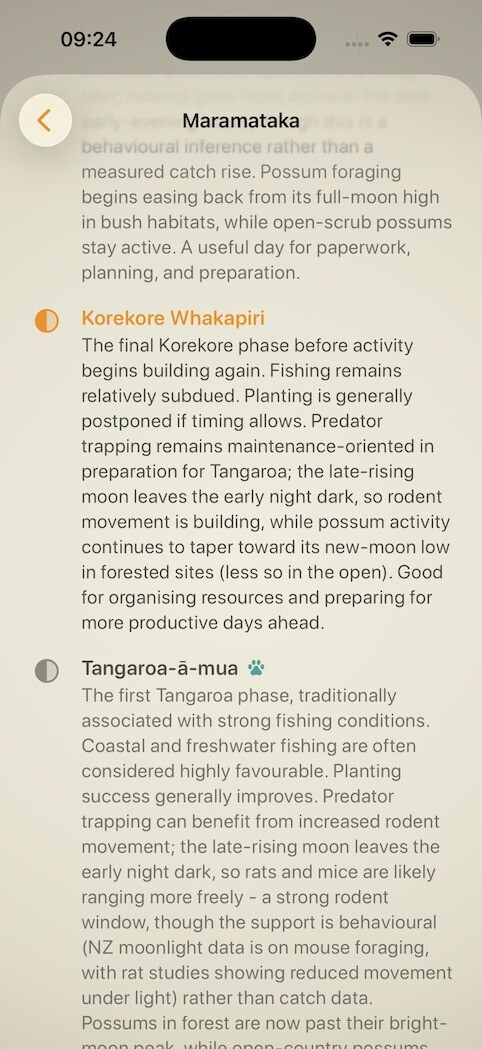
But a common thread runs through many traditions: the Tangaroa phase, about a week after the full moon during the waning moon, is widely regarded as one of the best times for gathering kai. It’s also the period when the moon rises progressively later each night, leaving the early evening relatively dark. Many Aotearoa/NZ trappers reckon this is a productive window for catching rats and mice, while the brighter evenings around the full moon often seem to favour possum activity.
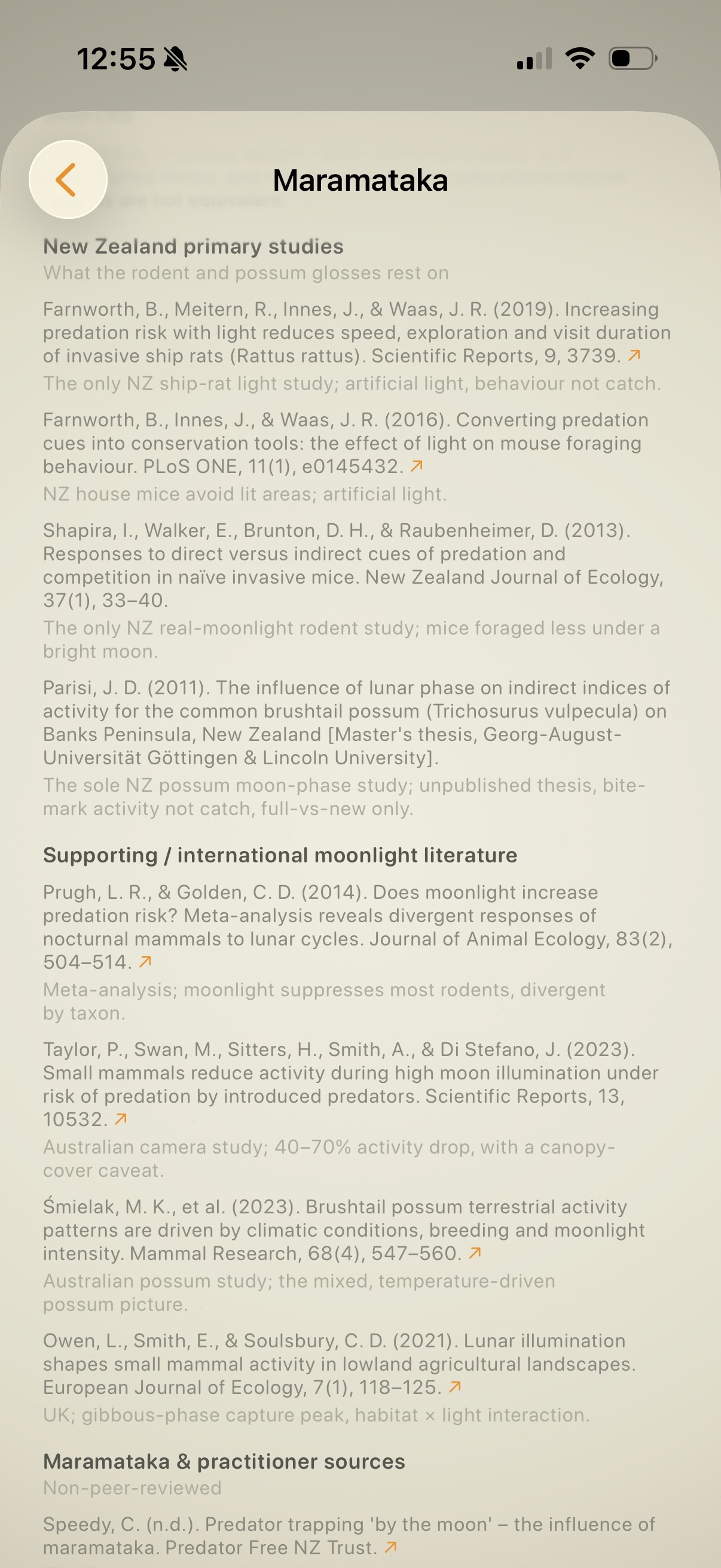
There’s a reasonable amount of science behind why. Rats and mice are prey animals, and studies consistently show they move less and stay cautious under bright moonlight. One study I found suggested ship rats reduced their speed, exploration and visit time under light, and a couple of NZ mouse studies found the same avoidance of lit areas and bright moon nights. A meta-analysis study showed moonlight suppresses most rodents. The important caveat is that nearly all of this measures movement and behaviour, not trap catch, so the dark-of-the-moon “rodent window” is a well-founded inference, a well placed trap and a fresh lure probably still matters more than the moon on any given night.
Possums appear to run the opposite way, but the evidence is thinner and messier. The single NZ study (an unpublished MSc thesis) using bite-mark activity rather than catch) found possum foraging higher at the full moon and lowest at new moon under closed forest canopy; but in open scrub possums stayed active across all phases. Stoats and other mustelids seem to show no established moonlight response at all, so their conditions don’t really appear to shift with the phase.
I did ask Goodnature if they could provide anonymous A24 smart-cap data of timestamps/animal to see if there was a pattern in their data, but unfortunately they refused citing information loss of control.
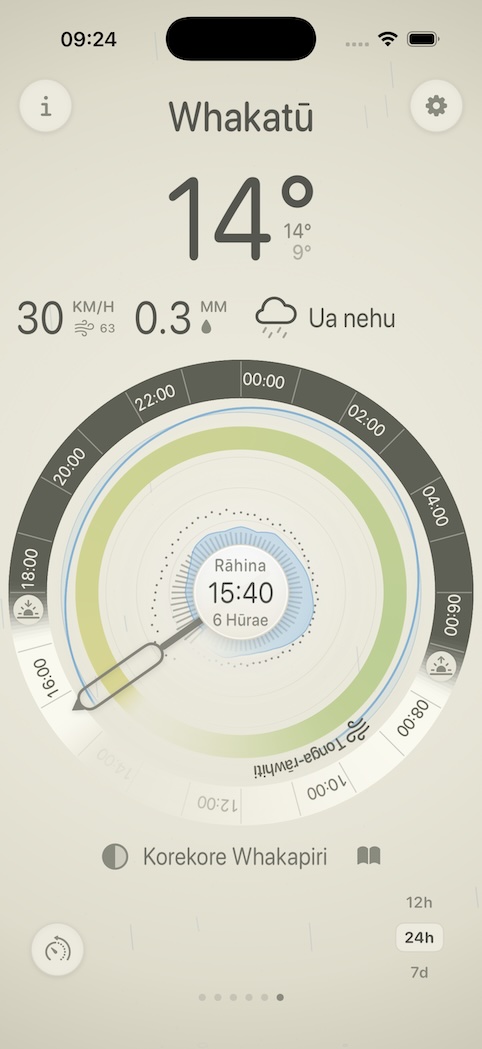
I’ve been developing Southerly, an iOS weather app with a few extra bells on, as a personal project for a while for my own use. It presents comprehensive weather data in a single visual “infographic” format rather than the usual lists and tables. My partner set up an urban backyard trapping group here in central Nelson - Rat-To-Tūī Trapping, bridging neighbouring trapping projects and supporting the Nelson Halo Project and by extension the Brook Waimārama Sanctuary. She is also studying te reo Māori at NMIT, so we built in a te reo option for the weather and Aotearoa/NZ place names. Then, and the reason for this post, explored whether the maramataka could be reflected in the app, perhaps making it useful for planning trapping.
We’ve chosen to follow Te Whānau-ā-Apanui, as recorded in Wiremu Tāwhai’s Living by the Moon (Huia Publishing, 2013) as it is widely cited and well documented. The month begins at Rākaunui (the full moon) and wanes through to Mutuwhenua, then the new-moon nights (Whiro) wax back up to Turu, 30 or 31 named nights, plus the intercalary Takatakapūtea in a long month. The night names, their order, and the placement of Takatakapūtea all come from Tāwhai’s scholarship.
If a unique view of the weather and maramataka timing interests you, you might like Southerly The intention is to donate a portion of proceeds to support conservation.